Difficulty
B1 30-C2 90
A1
A2
A2+
B1
B1+
B2
B2+
C1
C1+
C2
0
10
20
30
40
50
60
70
80
90
100
C1
NASA's Innovative Mars Mission Simulation Launches
Planner: kris
September 6, 2025
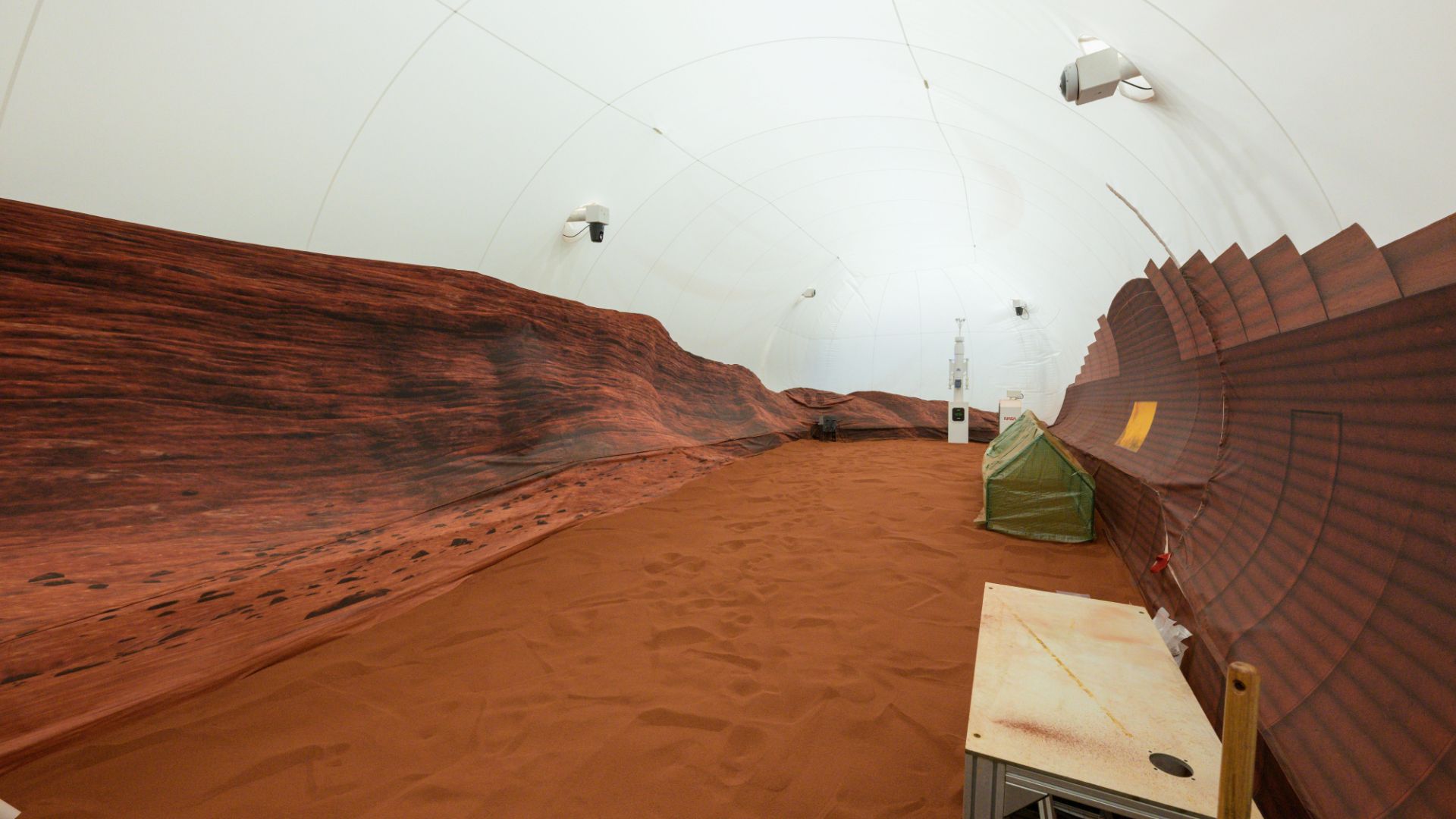
NASA is embarking on its longest-ever Mars mission simulation on Earth.Beginning October 19, 2025, a team of four research volunteers will live inside a 3D-printed habitat named Mars Dune Alpha, located at the Johnson Space Center in Houston.The mission, known as CHPEA, short for Crew Health and Performance Exploration Analog, will last 378 days, concluding on October 31, 2026.This immersive exercise simulates the living and working conditions astronauts might face on Mars.The habitat spans approximately 1,700 square feet, roughly the size of a modest family home.Designed as both living and working space, it includes private crew quarters, a recreation lounge, a workspace, exercise areas, and crop growing stations.The exterior features a simulated Martian surface complete with red soil and geological backdrops, enclosed within an inflatable dome to mirror the unforgiving environment of the Red Planet.This Earth-bound Mars mission recreates critical challenges.The crew will endure communication delays of up to 22 minutes one way, mimicking the latency between Earth and Mars, face restricted resources, simulated equipment failures, psychological stress of isolation, and the rigors of operational work in confinement.They will perform simulated spacewalks enhanced with virtual reality systems, conduct robotic operations, practice crop cultivation, maintain habitat systems, and exercise regularly.The goals of CHPEA are both scientific and strategic.NASA aims to collect essential data on physical health, cognitive function, behavior performance, and resource management under prolonged isolation.The results will guide planning for real crewed missions to Mars, supporting future mission designs, infrastructure, and astronaut well-being on long-duration interplanetary journeys.This is not the first Chepeya mission.The inaugural mission began on June 25, 2023 and lasted 378 days, concluding in July 2024 with four volunteer crew members emerging from isolation, having grown food, conducted simulated surface operations and studies, all while coping with the psychological weight of confinement.Crew members spoke of moments of nostalgia, missing the green of trees, changing seasons, fresh air, and simple joys of Earth, but also credited activities such as gaming, television, and reading for maintaining morale and group cohesion.Looking ahead, this second CHPEA mission continues to serve as a crucible for testing the limits of human adaptability.It represents a pivotal step on NASA's path toward sending humans to Mars, leveraging analog missions to refine technologies and strategies under realistic, controlled conditions, before any real interplanetary launch.