Difficulty
B1 30-C2 90
A1
A2
A2+
B1
B1+
B2
B2+
C1
C1+
C2
0
10
20
30
40
50
60
70
80
90
100
B2
Silver Reaches New Heights as Fed Rate Cut Anticipations Grow
Planner: Derek Lane
December 5, 2025
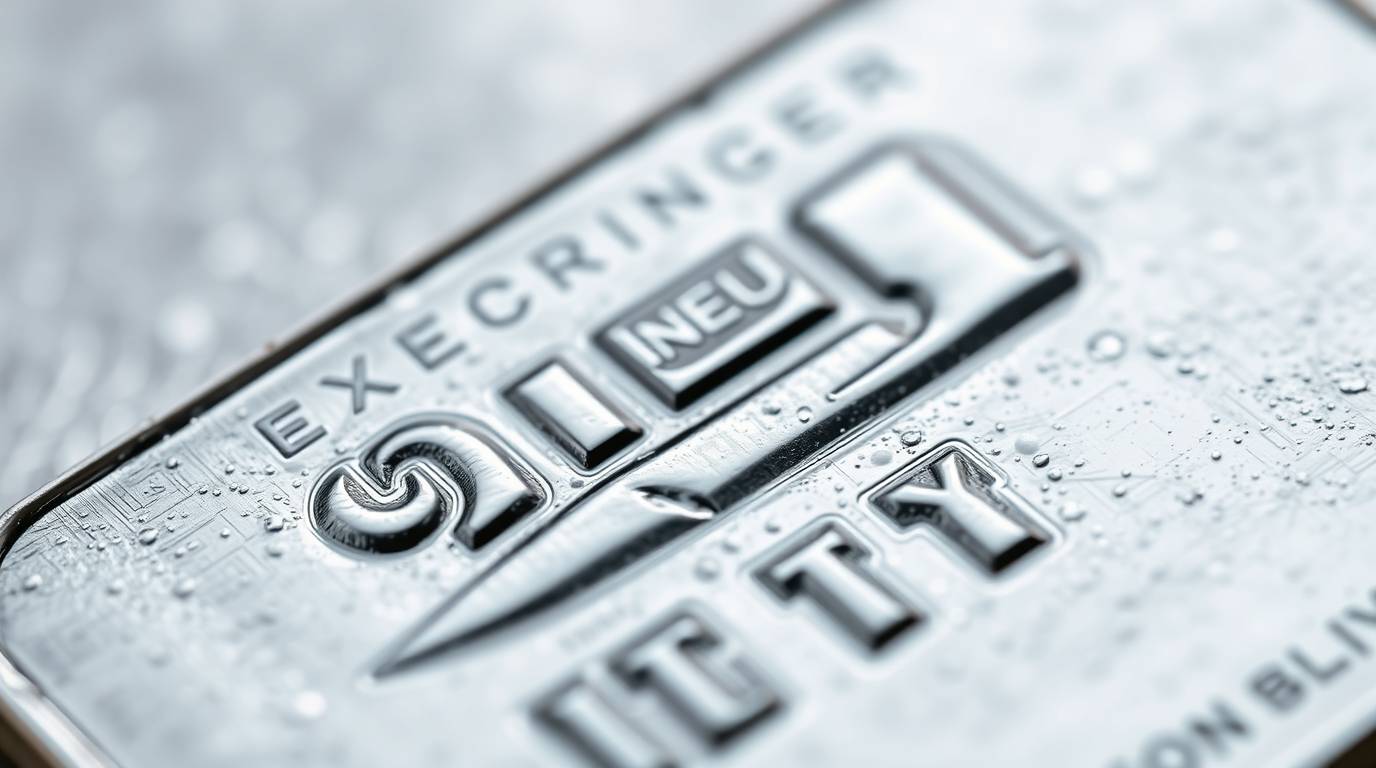
Silver rallied sharply in early December after weaker-than-expected United States employment data increased market expectations for a Federal Reserve interest rate cut.On Wednesday, silver climbed as high as $59.65 per ounce in intraday trading, a level described as a fresh record.By the close of trading, it had eased back, settling closer to $58 per ounce.
Reports from December 3, 2025 noted that subdued payroll figures in the United States strengthened investor bets that the Fed would move to ease policy in the near term.News outlets covering the movement described the price action as driven primarily by changing expectations about U.S. monetary policy and by renewed demand from investors seeking exposure to precious metals as a hedge against economic uncertainty.The move in silver occurred alongside broadly supportive moves in other safe-haven assets, although gold was reported to be holding steady even as silver scaled new highs.
Reports from December 3, 2025 noted that subdued payroll figures in the United States strengthened investor bets that the Fed would move to ease policy in the near term.News outlets covering the movement described the price action as driven primarily by changing expectations about U.S. monetary policy and by renewed demand from investors seeking exposure to precious metals as a hedge against economic uncertainty.The move in silver occurred alongside broadly supportive moves in other safe-haven assets, although gold was reported to be holding steady even as silver scaled new highs.
Silver Holds Near Peak as US Jobs Data Bolster Rate-Cut Bets
Silver Nears Record as US Payrolls Reinforce Fed Rate-Cut Bets
Silver price jumps to new all-time high at $59.655 per ounce, up 101% this year — why is silver price rising and is $65 next?
Gold holds steady, silver scales record high
Fed rate cut odds boost gold prices, investor demand for silver adds to physical squeeze and ATH – Heraeus
The recent spike in silver is set against a backdrop of shifting macroeconomic signals.Reports published on Dec. 1 and Dec. 3, 2025 linked the rally to weaker United States payroll numbers and to growing market expectations that the Federal Reserve may cut interest rates in the near future.Lower interest rates tend to reduce the opportunity cost of holding non-yielding assets, such as precious metals, and that dynamic contributed to renewed investor interest.
One source noted that silver has experienced very large gains over the course of the year, with year-to-date increases described as around 101 percent.Analysts and market observers cited in the coverage pointed to a combination of monetary policy anticipation and investor flows into physical and paper markets for precious metals.Coverage also indicated that the broader reaction was not limited to silver, as gold showed relative stability while markets digested the employment data and the implications for central bank policy decisions next week.Coverage of the rally identified several market-specific drivers beyond short-term monetary policy expectations.One report highlighted mounting investor demand for silver and suggested that this demand has contributed to a physical squeeze in available metal.That same coverage linked stronger investor appetite to the prospect of looser U.S. monetary policy, as implied by the recent employment data.
Another account pointed to the interaction between investor buying and constrained physical availability as a factor that can amplify price moves during swift market shifts.Observers in the reporting stressed that silver differs from gold in part because of its substantial industrial uses.
The combination of investor accumulation and ongoing industrial requirements was presented as a force that can produce sharper moves in silver prices than in other precious metals.Taken together, these reports described a market where monetary expectations, investor flows, and tight physical conditions are reinforcing one another.Market commentary accompanying the recent price jump emphasized that volatility is likely to remain elevated in the near term.Reports from Dec. 1 and Dec. 3 set out a range of scenarios tied to the Federal Reserve's next policy move.If employment data and other incoming indicators continue to support the view that the Fed will ease policy, markets could sustain higher levels of interest in silver, pushing prices toward and potentially above the $60 per ounce threshold that many traders view as a psychological barrier.
At the same time, coverage noted that silver may experience sharp retracements if sentiment shifts or if liquidity tightens.Observers also drew attention to the contrast with gold, which was described as holding steady even as silver reached record levels.
That relative stability in gold could temper some speculative pressure in the broader precious metals complex.In summary, the reporting presented a market in which central bank signals, investor demand for physical metal, and industrial consumption together will determine whether current levels are a short-lived spike or the start of a sustained higher-priced environment.
One source noted that silver has experienced very large gains over the course of the year, with year-to-date increases described as around 101 percent.Analysts and market observers cited in the coverage pointed to a combination of monetary policy anticipation and investor flows into physical and paper markets for precious metals.Coverage also indicated that the broader reaction was not limited to silver, as gold showed relative stability while markets digested the employment data and the implications for central bank policy decisions next week.Coverage of the rally identified several market-specific drivers beyond short-term monetary policy expectations.One report highlighted mounting investor demand for silver and suggested that this demand has contributed to a physical squeeze in available metal.That same coverage linked stronger investor appetite to the prospect of looser U.S. monetary policy, as implied by the recent employment data.
Another account pointed to the interaction between investor buying and constrained physical availability as a factor that can amplify price moves during swift market shifts.Observers in the reporting stressed that silver differs from gold in part because of its substantial industrial uses.
The combination of investor accumulation and ongoing industrial requirements was presented as a force that can produce sharper moves in silver prices than in other precious metals.Taken together, these reports described a market where monetary expectations, investor flows, and tight physical conditions are reinforcing one another.Market commentary accompanying the recent price jump emphasized that volatility is likely to remain elevated in the near term.Reports from Dec. 1 and Dec. 3 set out a range of scenarios tied to the Federal Reserve's next policy move.If employment data and other incoming indicators continue to support the view that the Fed will ease policy, markets could sustain higher levels of interest in silver, pushing prices toward and potentially above the $60 per ounce threshold that many traders view as a psychological barrier.
At the same time, coverage noted that silver may experience sharp retracements if sentiment shifts or if liquidity tightens.Observers also drew attention to the contrast with gold, which was described as holding steady even as silver reached record levels.
That relative stability in gold could temper some speculative pressure in the broader precious metals complex.In summary, the reporting presented a market in which central bank signals, investor demand for physical metal, and industrial consumption together will determine whether current levels are a short-lived spike or the start of a sustained higher-priced environment.